
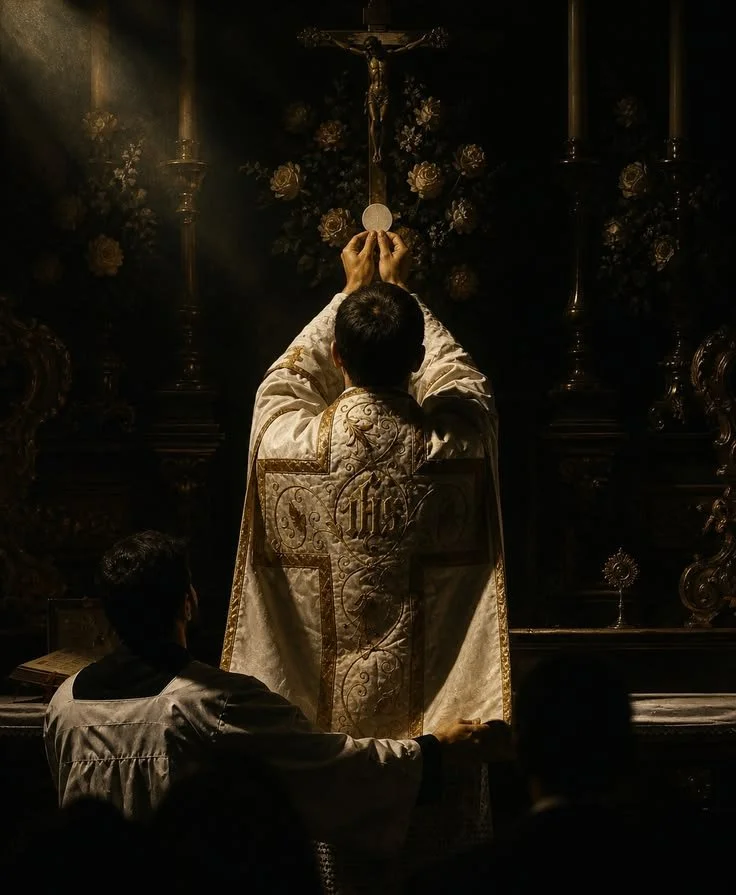
Eucharistic Miracles Throughout the Centuries
Signs of the True Presence of Jesus Christ in the Blessed Sacrament
For over two thousand years, the Catholic Church has proclaimed that Jesus Christ is truly present in the Holy Eucharist, not merely symbolically, but truly and substantially present: Body, Blood, Soul, and Divinity.
This belief comes directly from the words of Christ Himself at the Last Supper when He declared: “This is My Body” and “This is My Blood.” It is also rooted in Christ’s teaching in John Chapter 6, where He proclaimed: “My flesh is true food, and My blood is true drink.”
Throughout history, there have been extraordinary Eucharistic miracles that many believe God has permitted in order to strengthen faith, awaken repentance, restore reverence, and call souls back to Himself in the Blessed Sacrament. While the Church investigates such events carefully and cautiously, many of these miracles have endured centuries of examination, devotion, and testimony.
The Eucharistic Miracle of Lanciano
Italy, 8th Century
One of the oldest and most well-known Eucharistic miracles occurred in Lanciano, Italy, around the year 750 AD.
According to Catholic tradition, a Basilian monk was celebrating Mass while secretly struggling with doubts about the Real Presence of Jesus in the Eucharist. During the consecration, the Host visibly transformed into flesh, and the wine transformed into blood before the eyes of those present.
The flesh and blood were preserved and venerated for centuries. In 1970 and 1971, scientific investigations were conducted by Professor Odoardo Linoli, a physician and professor of anatomy. The examinations reportedly concluded:
The flesh was genuine human cardiac tissue from the heart
The blood was human blood identified as AB blood type
The flesh showed no signs of preservatives despite being over twelve centuries old
The blood and tissue remained remarkably preserved
The miracle of Lanciano remains one of the most widely known Eucharistic miracles in Catholic history and continues to draw pilgrims from around the world.
The Eucharistic Miracle of Bolsena-Orvieto
Italy, 1263
In the year 1263, a German priest named Father Peter of Prague was making a pilgrimage to Rome. Though devoted, he struggled interiorly with doubts concerning the Real Presence of Christ in the Eucharist.
While celebrating Mass in the town of Bolsena, the consecrated Host reportedly began to bleed onto the corporal cloth upon the altar. Shocked, the priest stopped the Mass and sought guidance from Pope Urban IV, who was nearby in Orvieto.
After an investigation, the Pope recognised the miracle as authentic. The blood-stained corporal was carried in procession to Orvieto, where it is still preserved today within the Cathedral of Orvieto.
This miracle deeply influenced Eucharistic devotion within the Church and is closely connected to the establishment of the Feast of Corpus Christi, a solemn feast dedicated entirely to honouring the Body and Blood of Christ in the Eucharist.
Saint Thomas Aquinas was commissioned around this time to compose hymns for the feast, including:
Pange Lingua
Tantum Ergo
O Salutaris Hostia
These hymns continue to be sung during Eucharistic adoration and Benediction throughout the world.
The Eucharistic Miracle of Santarém
Portugal, 13th Century
In the city of Santarém, Portugal, a woman reportedly sought help from a sorceress because of difficulties in her marriage. The sorceress instructed her to steal a consecrated Host from a Catholic church.
According to the historical account, after receiving Holy Communion, the woman concealed the Host in a cloth rather than consuming it. As she walked home, the cloth reportedly began to bleed visibly. Frightened, she hid the Host in a chest inside her home.
That night, brilliant rays of light were said to shine from the chest. Her husband witnessed the phenomenon, and both eventually confessed the sacrilege to the priest.
The Host was returned to the church and has been preserved for centuries. The miracle became widely known throughout Portugal and strengthened devotion to the Blessed Sacrament in the region.
The Eucharistic Miracle of Siena
Italy, 1730
In 1730, thieves broke into the Church of Saint Francis in Siena and stole consecrated Hosts from the tabernacle.
Several days later, the Hosts were discovered hidden among dust and poor box offerings. The Hosts were recovered reverently and preserved.
What astonished many was that the Hosts reportedly remained fresh and incorrupt for centuries without natural deterioration. Numerous examinations were carried out over the years, and witnesses testified that the Hosts retained the appearance and qualities of newly baked unleavened bread despite the passage of time.
For Catholics, the miracle became a powerful reminder of the sacredness of the Eucharist and the need for deep reverence toward the Blessed Sacrament.
The Eucharistic Miracle of Amsterdam
Netherlands, 1345
In 1345, a seriously ill man in Amsterdam received Holy Communion and later vomited. Following the custom of the time, the contents were placed into a fire because they contained the consecrated Host.
According to the account, the Host was later discovered intact within the flames and could not be consumed by the fire. Witnesses reportedly attempted multiple times to burn it, but the Host remained unharmed.
The miracle became the centre of major Eucharistic devotion in the Netherlands and led to annual silent Eucharistic processions known as the “Stille Omgang,” which continue even today.
The Eucharistic Miracle of Turin
Italy, 1453
In 1453, during warfare in northern Italy, soldiers looted a church and stole a monstrance containing the Blessed Sacrament.
As the stolen goods were transported through Turin on a mule, witnesses reported that the animal suddenly stopped and knelt. The monstrance then reportedly fell open, and the consecrated Host rose visibly into the air surrounded by light.
Large crowds gathered in astonishment. According to tradition, the bishop came in procession carrying a chalice, and the Host descended into it before the people.
The site later became associated with deep Eucharistic devotion and eventually the building of the Basilica of Corpus Domini in Turin.
The Eucharistic Miracle of Faverney
France, 1608
In the Abbey Church of Faverney in eastern France, Benedictine monks were holding a Eucharistic devotion during the feast of Pentecost.
During the night, a fire broke out and consumed the altar and surrounding decorations. When the fire was extinguished, witnesses reported that the monstrance containing the Blessed Sacrament was suspended in the air above the destroyed altar without support.
The Host reportedly remained untouched by the flames for approximately thirty-three hours until another altar could be prepared beneath it.
Thousands reportedly witnessed the event, and Church authorities conducted formal investigations soon afterward.
The Eucharistic Miracle of Buenos Aires
Argentina, 1996
In August 1996, a desecrated Host was reportedly discovered in a church in Buenos Aires, Argentina. Following Catholic practice, the Host was placed in water within the tabernacle so it could dissolve reverently.
Several days later, the Host reportedly appeared transformed into a bloody substance. The local Archbishop at the time, Jorge Mario Bergoglio, later Pope Francis, authorised an investigation.
Scientific analyses conducted years later reportedly identified human tissue consistent with heart muscle tissue. Some reports also stated the tissue showed characteristics associated with living or recently living tissue and signs of severe stress or suffering.
The event became one of the most discussed modern Eucharistic miracles and renewed interest in Eucharistic devotion around the world.
The Eucharistic Miracle of Sokółka
Poland, 2008
In the town of Sokółka, Poland, a consecrated Host accidentally fell during Holy Communion. Following Church procedure, it was placed into water to dissolve reverently.
According to reports, a red mark later appeared on the Host. The local Church authorities initiated an investigation, and pathologists examined the substance.
The examination reportedly concluded that tissue resembling human heart muscle appeared intertwined with the Host in a way scientists stated was difficult to explain naturally.
The miracle drew pilgrims from many nations and deepened Eucharistic devotion throughout Poland.
The Eucharistic Miracle of Tixtla
Mexico, 2006
In Tixtla, Mexico, a religious sister noticed a reddish substance appearing on a consecrated Host during a retreat.
After a lengthy investigation authorised by Church authorities, scientific analysis reportedly indicated the presence of human blood and tissue.
Investigators stated that the blood was human blood type AB, the same blood type often associated with several other Eucharistic miracles and with studies connected to the Shroud of Turin.
The local bishop eventually approved devotion connected to the event after years of study and examination.
The Scientific Similarities
Throughout many of the Eucharistic miracles that have undergone scientific examination, investigators have reported striking similarities that continue to astonish believers and medical professionals alike.
In several of the most well-known miracles, including Lanciano, Buenos Aires, Tixtla, and Sokółka, examinations reportedly identified human cardiac tissue, particularly tissue associated with the myocardium, the muscular wall of the heart.
Another detail frequently noted is the recurring identification of AB blood type in multiple Eucharistic miracles that were tested independently across different countries and centuries. Interestingly, AB blood type has also been associated in various studies with the blood found on the Shroud of Turin and the Sudarium of Oviedo.
In some examined miracles, investigators also reported findings consistent with living or recently living tissue, despite the extraordinary age or circumstances surrounding the samples. Some accounts described tissue showing signs associated with severe suffering or stress.
What makes these accounts especially remarkable to many believers is that these reported similarities appear across miracles separated by vast distances, different cultures, different centuries, and entirely unrelated historical circumstances. Yet the scientific findings repeatedly point back to blood, human tissue, and the human heart.
The heart has always held profound spiritual meaning within Christianity. The Sacred Heart of Jesus represents Christ’s immense love, suffering, mercy, and sacrifice for humanity. For many Catholics, it is deeply moving that so many Eucharistic miracles reportedly involve cardiac tissue, as though Christ continually reminds the world that the Holy Eucharist is not merely symbolic, but truly His living Presence given out of love for souls.
The Greatest Miracle of All
The Catholic Church remains cautious regarding all miraculous claims and carefully investigates such events over time. Catholics are not required to believe in Eucharistic miracles. The Church teaches that faith in the Real Presence rests first upon Jesus Christ Himself, Sacred Scripture, Apostolic Tradition, and the unchanging teaching of the Catholic Church.
Yet throughout history, Eucharistic miracles have often renewed belief during times of doubt, irreverence, disbelief, and spiritual decline. They have inspired conversions, Eucharistic adoration, confessions, vocations, deeper reverence within churches, and renewed devotion to Jesus truly present in the Blessed Sacrament.
For countless Catholics throughout the centuries, these miracles serve as extraordinary signs pointing back to the greatest miracle of all: that at every Holy Mass, through the priest acting in the person of Christ, ordinary bread and wine truly become the Body, Blood, Soul, and Divinity of Jesus Christ, who remains with His people until the end of time.